Casino
 Betting
 Games
Games 
 Payments
 Casino Bonus

Gambling in Ancient Civilizations: Facts You Should Know

- Gambling in Ancient Civilizations: Facts You Should Know
 Author: Sean O'Connell
 Updated: 11 December, 2025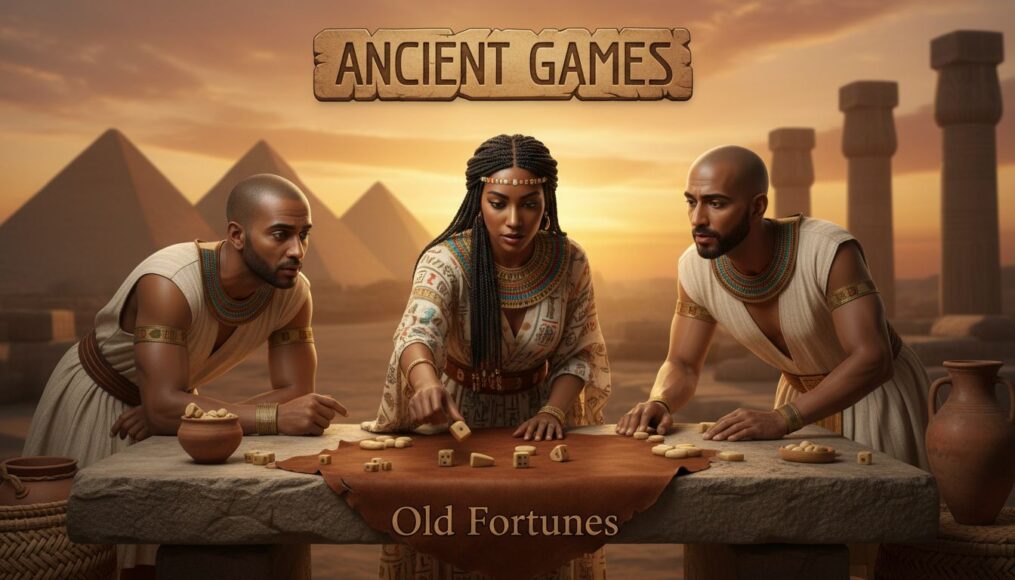
The human fascination with games of chance and skill is not a modern phenomenon. Long before the advent of glittering casinos and online platforms, gambling was an integral part of ancient civilizations, deeply woven into their social fabric, religious beliefs, and daily lives. From simple wagers on sporting events to complex dice games and the earliest forms of playing cards, the desire to test fate and seek fortune has captivated humanity since the dawn of recorded history, and even before.
Evidence suggests that rudimentary forms of betting date back to the Paleolithic era, predating written records. Archaeological discoveries point to the use of six-sided dice in Western Asia around 3000 BC, marking some of the earliest known gambling tools. The evolution of these early pastimes laid the groundwork for many of the casino games we enjoy today, showcasing a continuous thread of human entertainment and risk-taking across millennia.
Let's embark on a historical journey to explore how gambling manifested in some of the most influential ancient civilizations.
Gambling in Ancient China
Ancient China stands as a pivotal civilization in the history of gambling, with evidence of betting activities dating back to approximately 2300 BC during the Xia dynasty. The Chinese are credited with several groundbreaking innovations that profoundly impacted the world of gaming.
Most notably, they were the first to develop playing cards, complete with symbols and numbers, which emerged around the 9th century. This invention revolutionized games of chance and strategy, leading to the concept of “shuffling money” – a practice that eventually evolved into the card shuffling techniques we know today. Beyond cards, ancient China also gave birth to popular games like Keno, a lottery-style game still played globally, and other traditional Chinese games such as Mahjong, Yue Har Hai, Wei-Qi, and Xuan He Pai (the precursor to dominoes).
While gambling has a rich history in China, its legality in mainland China today is largely restricted, with state-run lotteries and specific games permitted only in regions like Macau and Hong Kong. Nevertheless, the historical legacy of Chinese gambling continues to influence gaming culture across the Far East and beyond.
Gambling in Ancient Greece
Despite a long-standing legal prohibition against gambling for several centuries, the citizens of Ancient Greece found ways to indulge in games of chance. Early variations of “heads or tails,” checkers, and other luck-based games were popular pastimes. Dice games, often played with three or four dice shaken from a special cup, were particularly prevalent.
Interestingly, the Greeks held a unique perspective on dice, often attributing their outcomes to the whims of sentient beings or divine intervention, rather than pure randomness. They sometimes viewed dice rolls as an easy way to make predictions, though they acknowledged these predictions had little bearing on the actual game's result.
Greek mythology itself provides a legendary origin for gambling. According to lore, the universe was divided among the gods Hades, Zeus, and Poseidon through a game of chance. Poseidon claimed the seas, Zeus won the skies, and Hades, drawing the short straw, was left with the underworld. This mythical tale underscores how deeply ingrained the concept of fate and chance was in the Greek psyche.
Gambling in Ancient Rome
Ancient Rome is renowned for its pervasive gambling culture, which flourished despite strict legal prohibitions. Even prominent figures, such as Emperor Augustus, were rumored to have a significant gambling addiction, highlighting the widespread nature of the activity across all social strata.
While gambling was generally illegal, there was one notable exception: the annual festival of Saturnalia. Held in honor of the god Saturn, this week-long celebration offered a unique period of social inversion and revelry. During Saturnalia, traditional societal rules were relaxed, allowing both men and women to freely drink, feast, and, crucially, gamble without legal repercussions.
A central aspect of Saturnalia was the temporary reversal of roles between enslaved people and their enslavers. During this time, enslaved individuals were permitted to place bets and even dine at the same table as their masters, offering a rare glimpse into a more egalitarian, albeit temporary, social order fueled by the spirit of games and chance.
The Enduring Legacy of Ancient Gambling
From the invention of playing cards in China to the mythical dice games of Greece and the festive gambling of Rome, the history of gambling is a testament to humanity's enduring fascination with risk, reward, and the unpredictable nature of fate. These ancient practices laid the foundation for the diverse world of gaming we know today, reminding us that the thrill of a wager is a timeless human experience.

Sean O'Connell
Content WriterSean grew up in a small town in County Kerry, Ireland. He always had a love for storytelling and writing, which led him to pursue a career in content writing. He currently lives in Dublin, where he spends his free time exploring the city and visiting different casinos.
Most Recent News
Get the latest information