Casino
 Betting
 Games
Games 
 Payments
 Casino Bonus

Have You Ever Heard of the Game Patience?

- Have You Ever Heard of the Game Patience?
 Author: Sean O'Connell
 Updated: 23 November, 2025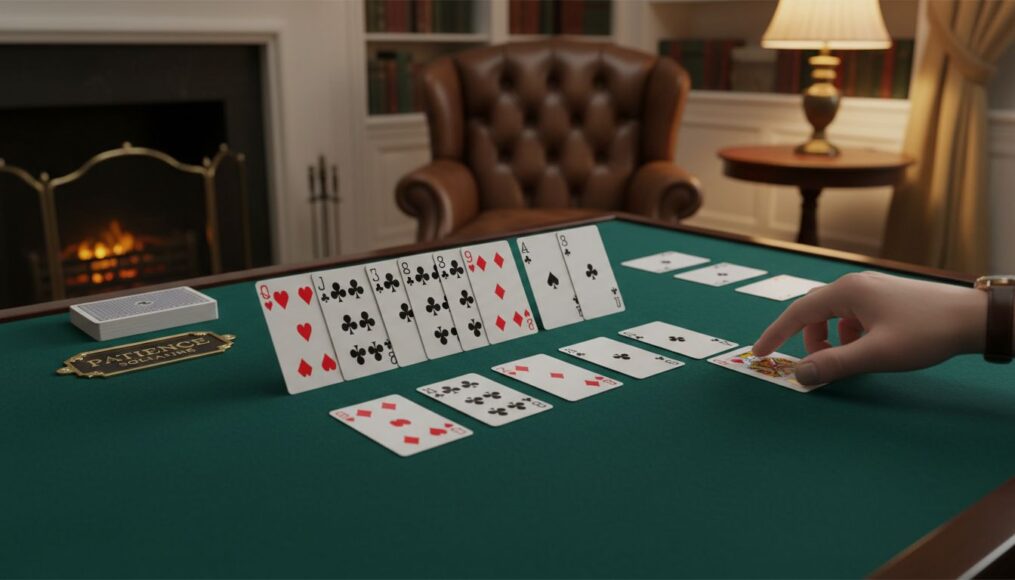
The world of card games is vast and varied, offering everything from high-stakes poker to relaxing solo challenges. Among these, one game stands out for its enduring popularity and universal appeal: Patience, more commonly known as Solitaire. While not a traditional casino game in the vein of blackjack or roulette, Solitaire holds a special place in the hearts of card game enthusiasts, offering a unique blend of strategy, luck, and mental engagement.
Often associated with quiet contemplation and a satisfying sense of accomplishment, Solitaire has transcended generations, finding its way from physical card decks to digital screens worldwide. It's a game that requires focus and foresight, making it a perfect mental exercise for anyone looking to sharpen their strategic thinking.
Let's delve into the classic game of Patience, explore its fundamental rules, and understand why it continues to captivate players in 2025 and beyond.
What is Patience (Solitaire)?
Patience, or Solitaire, refers to a genre of card games played by a single person. The objective is typically to arrange a shuffled deck of cards into a specific order, often by suit and rank, following a set of rules. The most famous and widely played version is Klondike Solitaire, which is what most people refer to when they simply say “Solitaire.”
The game is believed to have originated in 18th-century Europe, possibly in Germany or France, before gaining immense popularity across the globe. Its name, “Patience,” aptly describes the virtue required to succeed, as many games can be challenging and require careful planning.
How to Play Klondike Solitaire: A Step-by-Step Guide
Klondike Solitaire is typically played with a single standard 52-card deck. Here’s how to set up and play the game:
The Setup
- The Tableau: Deal 28 cards into seven columns. The first column has one card, the second has two, and so on, up to seven cards in the seventh column. Only the top card of each column is face-up; the rest are face-down. This arrangement is called the “tableau.”
- The Stock Pile: The remaining 24 cards form the “stock pile,” placed face-down.
- The Waste Pile: Next to the stock pile, an empty space is reserved for the “waste pile,” where cards from the stock are turned over.
- The Foundation Piles: Four empty spaces are designated for the “foundation piles,” usually above the tableau. These are where you'll build your winning stacks.
The Goal
The ultimate objective is to move all 52 cards from the tableau and stock pile to the four foundation piles. Each foundation pile must be built up in ascending order (Ace, 2, 3, …, King) and by suit (e.g., all hearts in one pile, all spades in another).
Gameplay Mechanics
You make moves by manipulating cards on the tableau, drawing from the stock pile, and moving cards to the foundation piles. Here are the core rules:
- Building on the Tableau: You can move cards between columns on the tableau. Cards must be placed in descending order and alternating colors. For example, a red 7 can be placed on a black 8.
- Revealing Face-Down Cards: When you move a face-up card from a tableau column, revealing a face-down card beneath it, you must turn that face-down card over. This is crucial for opening up new possibilities.
- Moving Sequences: You can move entire sequences of cards (e.g., a black 8, red 7, black 6) from one tableau column to another, as long as the top card of the sequence can be legally placed on the target column's bottom card.
- Using the Stock Pile: If you run out of moves on the tableau, you can draw cards from the stock pile. Typically, you turn over one or three cards at a time to the waste pile. Only the top card of the waste pile is available for play. Once the stock pile is exhausted, you can often “redeal” the waste pile back into the stock (without shuffling) to go through it again.
- Filling Empty Tableau Columns: If a tableau column becomes empty, only a King (or a sequence starting with a King) can be moved into that empty space. This is a powerful move that can unlock many other plays.
- Building the Foundation Piles: Aces are the starting point for the foundation piles. Once an Ace is available (from the tableau or waste pile), you can move it to an empty foundation slot. Subsequent cards must be placed on top of the previous card in ascending order and of the same suit (e.g., Ace of Hearts, then 2 of Hearts, then 3 of Hearts, and so on).
Key Strategies for Success
While luck plays a role in the initial deal, strategic thinking significantly increases your chances of winning:
- Prioritize Revealing Hidden Cards: Always try to make moves that turn over face-down cards on the tableau. The more cards you see, the more options you have.
- Don't Rush to Move Cards to Foundations: While the goal is to get cards to the foundations, sometimes holding a card on the tableau (e.g., a 2 or 3) can be useful for building sequences and revealing other cards. Only move cards to the foundation if they don't block any potential tableau moves.
- Empty Columns Wisely: Emptying a tableau column is powerful because it allows you to bring in a King. Plan your moves to create empty columns when you have a King ready to fill it.
- Think Ahead: Before making a move, consider its consequences. Will it open up new plays or block future options?
Why Patience Endures
Patience has remained a beloved pastime for centuries for several compelling reasons:
- Mental Stimulation: It's a fantastic brain exercise, requiring logical thinking, pattern recognition, and planning. Each game presents a new puzzle to solve.
- Stress Relief: The repetitive, yet engaging, nature of Solitaire can be incredibly calming and meditative, offering a perfect escape from daily stresses.
- Accessibility: With a standard deck of cards or a digital device, Solitaire is readily available to almost anyone, anywhere. It's often pre-installed on computers and widely available as free apps.
- Sense of Accomplishment: Successfully completing a challenging game of Solitaire provides a genuine sense of achievement and satisfaction.
Patience in the Digital Age
The digital revolution has only amplified Solitaire's reach. Online versions and mobile apps offer countless variations of the game, from the classic Klondike to Spider Solitaire, FreeCell, Pyramid, and more. Many platforms now offer daily challenges, leaderboards, and even competitive play where players can test their skills against others, sometimes for small prizes or bragging rights. While not typically found in traditional online casinos alongside slots or live dealer games, its presence in the broader online gaming landscape is undeniable.
Patience (Solitaire) is more than just a simple card game; it's a timeless classic that offers a perfect blend of challenge and relaxation. Whether you're looking to sharpen your mind, unwind after a long day, or simply enjoy a moment of quiet entertainment, Solitaire remains a rewarding choice for players of all ages in 2025 and beyond.

Sean O'Connell
Content WriterSean grew up in a small town in County Kerry, Ireland. He always had a love for storytelling and writing, which led him to pursue a career in content writing. He currently lives in Dublin, where he spends his free time exploring the city and visiting different casinos.
Most Recent News
Get the latest information