Casino
 Betting
 Games
Games 
 Payments
 Casino Bonus

Basic Information about House Edge

- Basic Information about House Edge
 Author: Sean O'Connell
 Updated: 16 October, 2025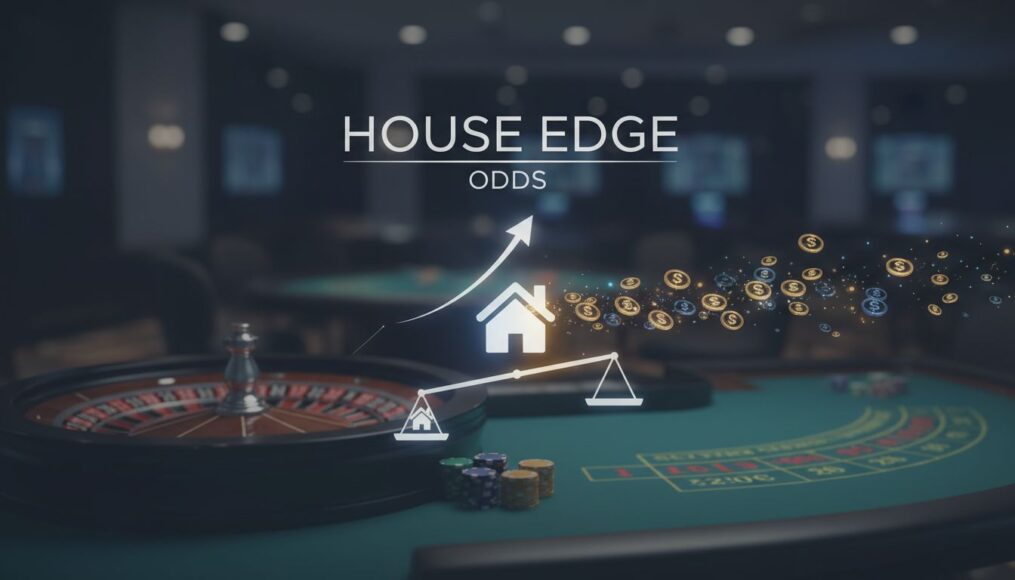
Gambling at an online casino or a land-based venue offers thrilling entertainment and the chance to win. However, behind every spin of the roulette wheel or deal of a blackjack hand lies a fundamental mathematical principle known as the “house edge.” Understanding this concept is crucial for any player, as it explains why, over time, the casino almost always comes out ahead.
The house edge is the built-in advantage that the casino has over players in any given game. It's expressed as a percentage and represents the average portion of each bet that the casino expects to keep in the long run. This isn't about individual wins or losses, but rather the statistical certainty over thousands, even millions, of wagers.
Let's illustrate with an example: American Roulette. This version of roulette features 38 pockets: numbers 1-36, a single zero (0), and a double zero (00). If you place a €1 bet on a single number, and the casino paid out “true odds” (meaning the payout reflects the actual probability), you would receive €38 for a win (€1 original bet + €37 profit). However, casinos typically pay €35 for a winning single number bet. This difference is the house edge in action. The casino pays less than the true odds, ensuring a profit margin over time.
How the House Edge Works in Practice
Casinos are businesses, and the house edge is their business model. It guarantees their profitability over the long term. While individual players can and do experience significant wins in the short term, the mathematical advantage of the house ensures that the casino will always profit if enough bets are placed.
Think of it this way: if a player defies the odds and hits a lucky streak, like rolling a seven on a craps come-out roll ten times in a row, it's an anomaly. The casino might even check the dice for tampering in a physical setting. But these short-term fluctuations don't negate the underlying mathematics. Over days, weeks, and months of continuous play, the house edge steadily works to the casino's favour, gradually eroding player funds.

House Edge Across Popular Casino Games
The house edge varies significantly from one game to another. Knowing these percentages can help players make informed decisions about where to place their bets. Here's a look at the typical house edge for some popular casino games:
- Blackjack: When played with optimal basic strategy, blackjack boasts one of the lowest house edges, often around 0.5% to 1%. This makes it a favourite for strategic players.
- Craps: With certain bets (like Pass Line with full odds), the house edge can be as low as 0.8% or even less, making it another favourable option for informed players.
- Roulette:
- American Roulette (with two zeros): Typically has a house edge of 5.26%.
- European Roulette (with a single zero): Offers a much better house edge of 2.7%, making it the preferred choice for many players.
- Slot Machines: The house edge on slots can vary widely, from around 2% to as high as 15-20% or more, depending on the specific game and its Return to Player (RTP) percentage. While they offer the allure of massive jackpots, they generally have a higher house advantage.
The Player's Perspective: Balancing Odds and Enjoyment
If some games offer a significantly lower house edge, why don't all players flock to blackjack tables? The answer lies in the “fun factor” and the potential for different types of wins. Many players are drawn to the excitement and simplicity of games like slots, where the possibility of a life-changing jackpot outweighs the higher house edge for them.
Consider a player with a €1,000 budget for blackjack. Mathematically, their best chance to win €1,000 would be to place a single €1,000 bet. They would either double their money or lose it all. However, for most, this isn't an enjoyable way to gamble. The desire for extended play, the thrill of multiple bets, and the social aspect of gaming often lead players to make many smaller bets over a longer period. This extended play, while more entertaining, gives the house edge more opportunities to work its magic, gradually reducing the player's bankroll.
Strategies to Minimize the House Edge
While you can't eliminate the house edge, you can certainly minimize its impact and improve your chances of a winning session:
- Choose Games Wisely: Opt for games with a lower house edge, such as blackjack (when played correctly) or European roulette over American roulette.
- Learn Optimal Strategy: For games like blackjack and video poker, learning and consistently applying basic strategy can significantly reduce the house edge. For craps, avoid “sucker bets” that carry a much higher house advantage.
- Manage Your Bankroll: Set a budget for your gambling sessions and stick to it. This helps ensure you don't chase losses and allows you to walk away when you've reached your limit.
- Limit Play Duration: The longer you play, the more the house edge asserts itself. Consider setting time limits for your sessions.
- Utilize Bonuses: Take advantage of casino bonuses like free spins or no deposit bonuses. These can give you extra playing time or funds, effectively reducing your personal cost of play.
The house edge is an undeniable reality of casino gambling. However, by understanding how it works and employing smart strategies, players can enjoy their gaming experience responsibly and potentially extend their playtime, increasing their chances of walking away a winner in the short term. Always remember to gamble responsibly and only with money you can afford to lose.

Sean O'Connell
Content WriterSean grew up in a small town in County Kerry, Ireland. He always had a love for storytelling and writing, which led him to pursue a career in content writing. He currently lives in Dublin, where he spends his free time exploring the city and visiting different casinos.
Most Recent News
Get the latest information