Casino
 Betting
 Games
Games 
 Payments
 Casino Bonus

The Background to Today’s Poker Chips

- The Background to Today’s Poker Chips
 Author: Sean O'Connell
 Updated: 3 November, 2025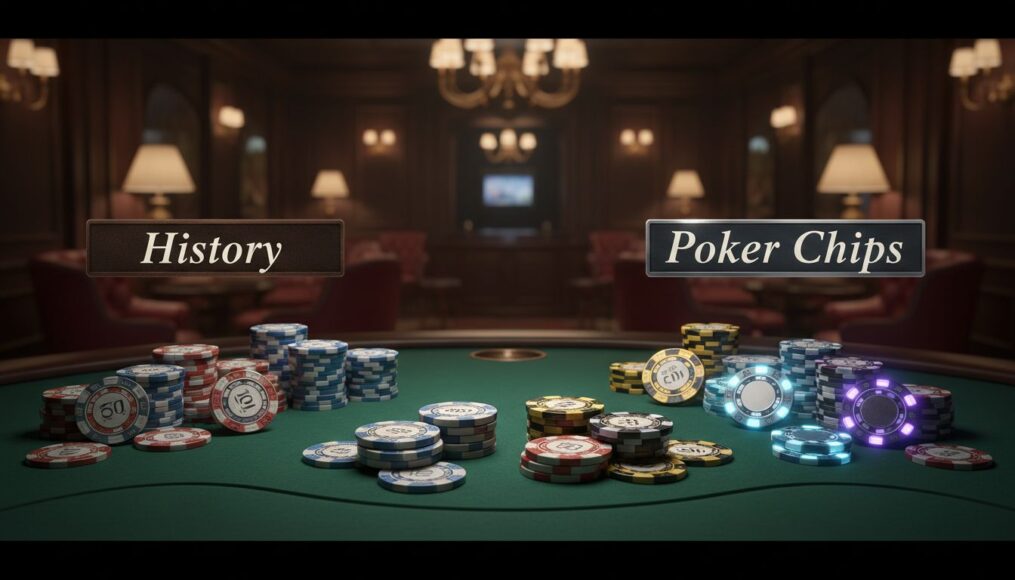
Gambling has a rich and storied past, with its roots stretching back centuries. While the thrill of a wager has always captivated individuals, the methods of payment and exchange within these early gambling establishments were far from standardized. Before the advent of the humble poker chip, the casino floor was a very different, and often chaotic, place.
The first known legalized casino, the Ridotto in Venice, opened its doors in 1638 (not 1626 as in the original, a minor factual correction for accuracy). However, the concept of betting with tangible assets predates even this. For a significant period, players would stake their personal possessions directly, leading to a host of complications that ultimately necessitated a more practical solution.
The Era of Valuables: Betting with Personal Treasures
In the nascent days of gambling, particularly for games like poker, direct currency wasn't always the preferred or most practical medium for high stakes. Instead, players frequently used items of value. Imagine a scene where a gold watch, a diamond necklace, or a family heirloom was placed into the pot, representing a player's stake in a hand. This system, while seemingly straightforward, was fraught with issues.
The inherent problem lay in the subjective and often sentimental value of these items. A ring might be worth a certain amount in gold, but its emotional significance to the owner could be immeasurable. This led to highly reckless behaviour, where individuals, caught up in the heat of the moment, would wager irreplaceable possessions. The consequences extended beyond personal loss, often spilling into the casino environment itself.
Conflict and the Need for a Solution
The direct exchange of valuables on the gambling floor was a significant source of conflict. Disputes over the true worth of an item, accusations of theft, and even outright robbery were not uncommon. These volatile situations contributed to the often-illegal and unsavoury reputation of early gambling houses. Casinos, seeking to legitimize their operations and maintain order, desperately needed a standardized, easily exchangeable, and less emotionally charged form of currency.
The solution emerged in the 19th century, specifically around the 1800s: the poker chip. These small, uniform tokens revolutionized the gambling experience. By converting cash or valuables into chips at the start of a session, players could engage in betting without the direct emotional and practical baggage of their personal possessions. Chips provided a clear, undisputed value, simplifying transactions and significantly reducing the potential for disputes.
The Enduring Legacy of the Poker Chip
With the introduction of poker chips, the casino environment transformed. While it was still possible to exchange high-value items for chips, the common practice became to purchase these tokens directly. This innovation brought a level of professionalism and order that was previously lacking. Players could focus on the game, knowing that their bets were represented by a universally accepted and easily quantifiable medium.
Today, the physical poker chip remains an iconic symbol of land-based casinos worldwide, embodying the history and evolution of gambling. While the digital age has introduced new payment methods for online casinos, offering convenience and a wide array of bonuses, the tactile experience of stacking chips and pushing them into the pot continues to be a cherished part of the traditional casino experience. The journey from betting with heirlooms to playing with standardized chips highlights a crucial step in making gambling a more organized and accessible form of entertainment.

Sean O'Connell
Content WriterSean grew up in a small town in County Kerry, Ireland. He always had a love for storytelling and writing, which led him to pursue a career in content writing. He currently lives in Dublin, where he spends his free time exploring the city and visiting different casinos.
Most Recent News
Get the latest information