Casino
 Betting
 Games
Games 
 Payments
 Casino Bonus

GDPR and Irish Online Casinos: How to Request Your Data, Delete Your Account, and Understand Profiling

- GDPR and Irish Online Casinos: How to Request Your Data, Delete Your Account, and Understand Profiling

 Author: Lukas Mollberg
 Updated: 2 April, 2026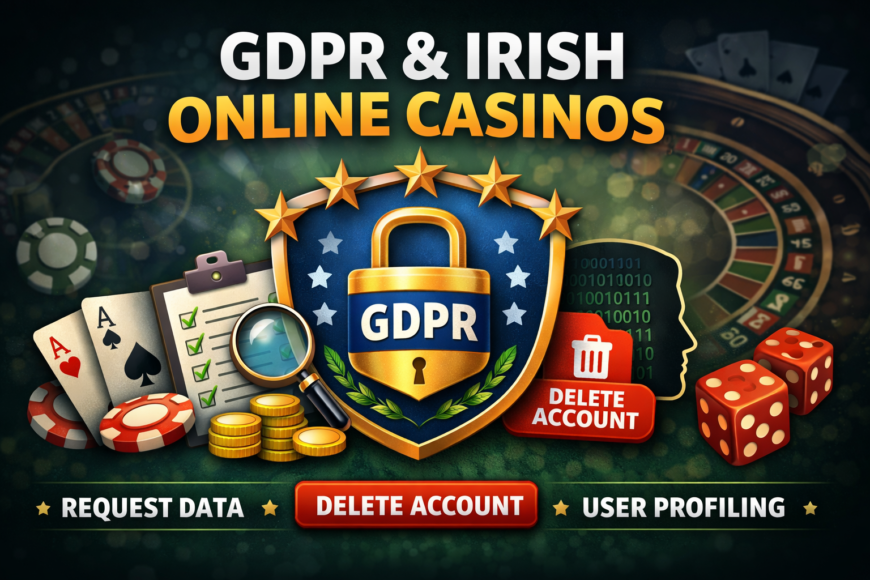
Online casinos in Ireland operate within a strict regulatory and legal framework, and one of the most important layers of that framework is the General Data Protection Regulation (GDPR). This EU-wide law gives players clear rights over how their personal data is collected, used, stored, and shared. For anyone using digital gambling platforms, understanding these rights is not just useful—it is essential.
At Casinoble, we often see that players focus heavily on bonuses, games, or payment methods, but rarely consider what happens to their personal data behind the scenes. Whether you are exploring options like modern online casino platforms or simply signing up to play a few rounds, your data is constantly being processed.
This article explains how GDPR applies specifically to Irish online casinos. It walks through how to request your data, how to delete your account, and what profiling means in a gambling context.
What GDPR Means for Online Casino Players
GDPR is designed to give individuals control over their personal data. In the context of online casinos, this includes everything from your name and payment details to your playing habits and betting patterns.
Online casinos must follow strict rules when handling this data. They are required to be transparent, secure, and accountable. This is especially relevant when engaging with features like secure casino payment methods, where sensitive financial data is involved.
Key Rights Under GDPR
Players have several important rights under GDPR:
- The right to access your personal data
- The right to correct inaccurate information
- The right to request deletion (right to be forgotten)
- The right to restrict or object to processing
These rights are not optional for casinos—they are legal obligations.
Why It Matters in Gambling
Unlike many other industries, online gambling platforms collect behavioral data at scale. Every bet, session length, and deposit contributes to your user profile. This data is often used to personalize offers, detect fraud, or encourage engagement.
That makes GDPR particularly relevant. It ensures that this level of tracking does not happen without accountability.
How to Request Your Data from an Irish Online Casino
Requesting your data is known as a Subject Access Request (SAR). Under GDPR, casinos must provide this information free of charge and within one month.
What You Can Ask For
When submitting a request, you can ask for:
- All personal data stored about you
- The purposes of data processing
- Third parties your data has been shared with
- The retention period for your data
This includes detailed logs, which can be especially relevant if you frequently engage in live casino table games or similar real-time environments.
How to Submit a Request
Most casinos provide a dedicated email or form for GDPR requests. Typically, you will need to:
- Verify your identity
- Specify your request clearly
- Wait for confirmation and response
Casinos may ask for additional documentation to ensure the request is legitimate.
What to Expect in Response
The data provided can be extensive. It often includes:
- Account details
- Transaction history
- Gameplay activity
- Marketing preferences
This level of transparency allows you to see exactly how your behavior is tracked and interpreted.
Deleting Your Casino Account and Personal Data
Account deletion under GDPR is more complex than simply clicking a “close account” button. It involves legal and regulatory considerations, particularly in gambling.
The Right to Erasure Explained
The “right to be forgotten” allows users to request deletion of their personal data. However, casinos are not always able to fully comply immediately.
This is because gambling operators must retain certain records for:
- Anti-money laundering compliance
- Fraud prevention
- Responsible gambling monitoring
Practical Steps to Delete Your Data
To request deletion:
- Contact customer support or the GDPR officer
- Clearly state your request for data erasure
- Confirm your identity
- Request confirmation once processed
If you are using services such as mobile-friendly casino apps, make sure you remove access across all devices as well.
What Gets Deleted vs Retained
| Data Type | Deleted Immediately | Retained Temporarily |
| Profile information | Yes | No |
| Marketing preferences | Yes | No |
| Transaction records | No | Yes (legal reasons) |
| Betting history | Partial | Yes |
| Identity verification docs | No | Yes |
This table highlights a key point: GDPR does not override all other legal obligations.
Understanding Profiling in Online Casinos
Profiling is one of the most misunderstood aspects of GDPR. In online casinos, it refers to automated processing of your data to evaluate your behavior.
How Profiling Works
Casinos analyze player activity to:
- Personalize bonuses
- Detect risky gambling patterns
- Prevent fraud
For example, if you regularly claim offers like free spins casino bonuses, the system may categorize you as a bonus-focused player.
Types of Profiling Used
- Behavioral profiling (betting patterns, session time)
- Financial profiling (deposit frequency, withdrawal behavior)
- Risk profiling (signs of problem gambling)
These systems often rely on algorithms rather than human oversight.
Risks and Implications
Profiling can have both positive and negative effects:
- It can improve responsible gambling protections
- It can also lead to targeted promotions that encourage spending
GDPR gives you the right to object to certain types of profiling, especially if they have legal or significant effects.
Balancing Regulation, Privacy, and Player Experience
The relationship between GDPR and online casinos is not always straightforward. Operators must balance legal compliance with business objectives and user experience.
Regulatory Pressure
Irish-facing casinos often operate under multiple jurisdictions. This creates overlapping obligations, especially when combined with EU data laws.
Player Awareness
Many players are still unaware of their rights. This is particularly true among those focused on gameplay, such as users exploring popular online slot games, where data collection is less visible but equally significant.
Industry Trends
There is a growing shift toward:
- Greater transparency in data usage
- Simplified privacy policies
- More user control over settings
However, implementation varies widely between operators.
Practical Tips for Managing Your Data
Understanding your rights is one thing; using them effectively is another. Here are practical ways to stay in control.
Key Actions to Take
- Regularly review your account settings
- Limit unnecessary data sharing
- Submit access requests periodically
- Opt out of profiling where possible
When to Be More Cautious
You should pay extra attention when:
- Signing up to new platforms
- Using unfamiliar payment methods
- Accepting personalized offers
Even in environments like newly launched casino sites, where innovation is high, data practices may not always be fully transparent.
Conclusion
GDPR has fundamentally changed how online casinos handle personal data, giving Irish players more control than ever before. From requesting your data to deleting your account and understanding profiling, these rights are practical tools—not just legal concepts.
However, exercising these rights requires awareness and effort. Casinos operate in a complex regulatory environment where not all data can be erased immediately, and profiling remains a core part of the business model.
At Casinoble, the goal is to help players navigate not only games and bonuses but also the systems operating behind the scenes. Understanding GDPR is a key part of making informed decisions in today’s online gambling landscape.

Lukas Mollberg
Casino Expert | Head of Content at CasinobleLukas Mollberg is an experienced iGaming analyst and editorial lead with more than twenty years in gaming and digital media, including over eight years focused on online casinos. As Head of Content at Casinoble, he guides the editorial team, shapes review methodology, and ensures that research and analysis are grounded in verified data and clear evaluation standards.
Most Recent News
Get the latest information